 By Alex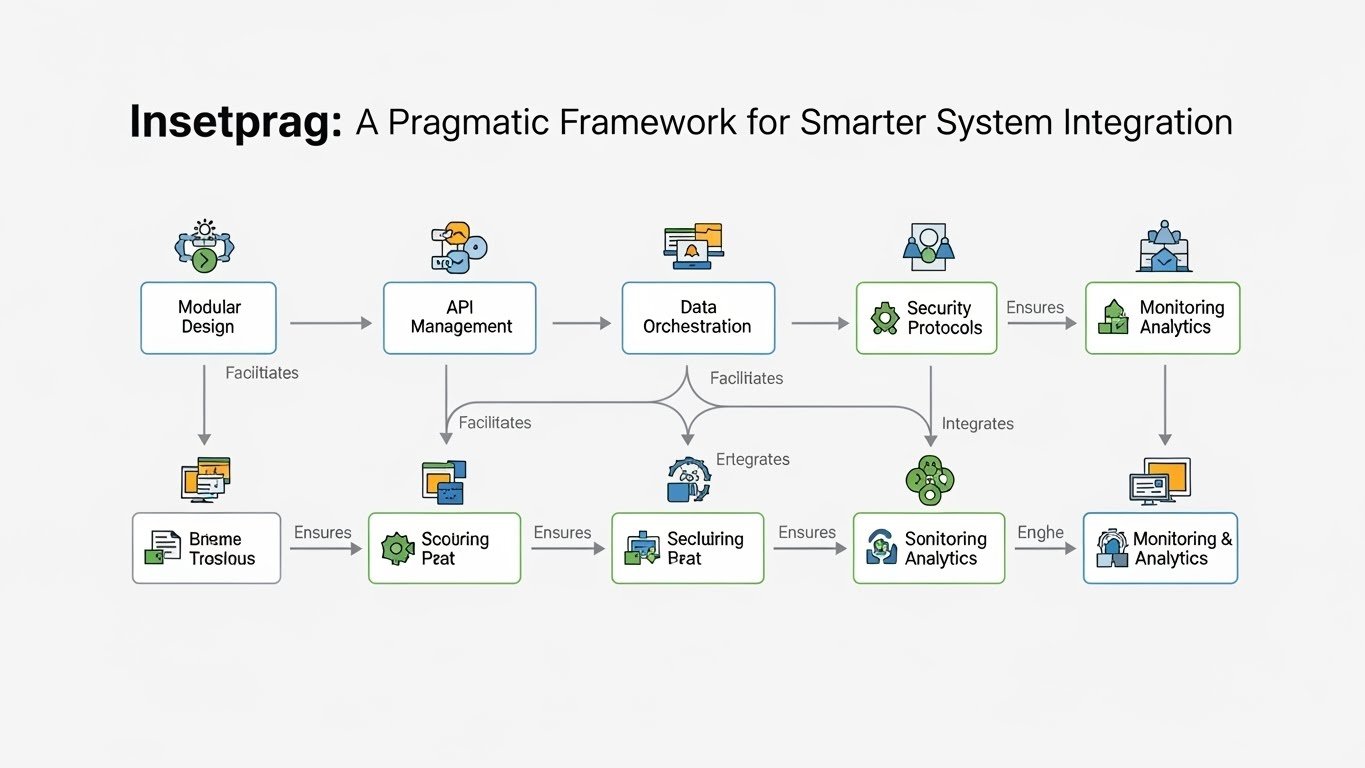
Insetprag represents a modern way of improving systems without dismantling what already works. In an era where innovation is often associated with disruption and replacement, this framework promotes a more thoughtful path—one centered on integrating practical insights into existing structures. The goal is not to rebuild from scratch, but to refine, enhance, and align systems with real-world needs.
This approach has gained attention across technology, design, education, healthcare, creative industries, and community development. By prioritizing practicality, context, and collaboration, it enables steady progress while maintaining stability.
Understanding the Concept
At its foundation, this framework blends three essential ideas:
-
Insertion of targeted improvements
-
Insight gained from data and experience
-
Pragmatism focused on realistic execution
Rather than chasing idealized solutions, the method works within current limitations. It recognizes that many systems are functional but inefficient, misaligned, or outdated. Improving them incrementally often delivers better outcomes than full-scale replacement.
The Philosophy of Smarter Integration
Traditional innovation models tend to emphasize speed and disruption. While effective in some cases, they often introduce risk, resistance, and instability. This pragmatic framework offers an alternative philosophy—progress through refinement.
It asks:
What meaningful improvements can be added right now without causing disruption?
By respecting existing workflows, users, and resources, change becomes more acceptable and sustainable.
Core Principles Behind the Framework
1. Context Before Action
Every system operates within a unique environment. Cultural norms, user behavior, technical constraints, and available resources all influence outcomes. This framework places strong emphasis on understanding context before making changes.
Solutions are designed to fit real conditions rather than forcing abstract models onto complex systems.
2. Gradual Improvement Over Radical Change
Large transformations are expensive and risky. Incremental enhancements, when guided by insight, are often more effective.
This method supports:
-
Lower implementation risk
-
Reduced costs
-
Faster adoption
-
Preservation of existing strengths
Small improvements accumulate into long-term progress.
3. Insight as the Driver of Decisions
Data alone is not enough, and neither is intuition. The strongest insights emerge when analytics, observation, and human feedback are combined.
This balanced approach ensures that decisions are informed, relevant, and grounded in reality.
4. Practical Execution
Ideas are only valuable when they can be implemented. This framework favors solutions that can be applied immediately or with minimal adjustment.
Complexity is avoided unless it clearly adds value.
5. Collaborative Thinking
Change works best when multiple perspectives are included. Stakeholders, users, and cross-functional teams all contribute to better outcomes.
Collaboration strengthens trust and improves long-term success.
Applications in Technology and Software
Many organizations rely on legacy systems that cannot be replaced easily. This pragmatic approach allows teams to modernize gradually.
Common applications include:
-
Enhancing performance without rebuilding platforms
-
Adding modular features
-
Improving usability step by step
-
Integrating automation and AI responsibly
These targeted improvements reduce downtime and operational risk.
Use in Product Design and User Experience
In design, dramatic overhauls often confuse users. A smarter approach focuses on refinement.
Designers apply this framework by:
-
Improving navigation
-
Reducing friction
-
Enhancing accessibility
-
Testing small, meaningful changes
Users benefit from familiarity combined with continuous improvement.
Role in Education Systems
Educational institutions often face resistance to rapid change. This framework supports modernization without overwhelming teachers or students.
Examples include:
-
Introducing digital tools into existing curricula
-
Enhancing teaching methods incrementally
-
Encouraging educator-led innovation
Learning environments evolve while preserving stability.
Impact on Healthcare and Public Services
Healthcare systems require reliability and trust. Sudden changes can be harmful. This approach enables careful improvement.
Practical applications include:
-
Streamlining patient workflows
-
Enhancing data sharing
-
Adding decision-support tools gradually
Innovation strengthens care rather than disrupting it.
Creative and Digital Art Applications
Artists and creators benefit from evolution without losing identity. This method supports creative growth while respecting originality.
Creators may:
-
Enhance existing styles using new tools
-
Collaborate with AI instead of replacing human creativity
-
Expand reach without sacrificing authenticity
The result is innovation with integrity.
Community and Social Development Use Cases
Imposed solutions often fail at the community level. This framework builds on what already exists.
It supports:
-
Local participation
-
Data-informed decision-making
-
Strengthening existing structures
Communities grow through empowerment rather than replacement.
Key Advantages of This Approach
Lower Risk
Working within existing systems minimizes technical and operational failure.
Cost Efficiency
Incremental changes require fewer resources than full transformations.
Higher Acceptance
Users adapt more easily to familiar systems that improve gradually.
Sustainable Progress
Growth remains steady and manageable over time.
Cross-Industry Flexibility
The framework adapts well across multiple sectors.
Limitations to Consider
This approach is not a universal solution. It may be less effective when:
-
Systems are fundamentally broken
-
Rapid, large-scale change is unavoidable
-
Deep system knowledge is lacking
It works best where foundations are stable but under-optimized.
Comparison With Traditional Innovation Models
| Traditional Models | Pragmatic Integration |
|---|---|
| Disruptive change | Incremental refinement |
| High cost | Cost-conscious |
| High risk | Risk-aware |
| Fast but unstable | Steady and sustainable |
| Top-down decisions | Collaborative input |
Rather than rejecting innovation, this framework improves how innovation is applied.
Looking Toward the Future
As industries move toward ethical, human-centered, and sustainable solutions, this pragmatic framework is gaining relevance.
Future directions may include:
-
AI-assisted insight integration
-
Greater use in governance and policy
-
Hybrid innovation models
-
Stronger focus on ethical design
Its adaptability makes it well-suited for complex modern challenges.
Why This Framework Matters Today
Modern systems face increasing pressure to evolve quickly while remaining stable. This approach offers balance.
It proves that progress does not require destruction. With the right insight and practical action, meaningful change can occur within existing structures.
Conclusion
Insetprag: A Pragmatic Framework for Smarter System Integration highlights a shift in how improvement is approached. Instead of replacing systems, it refines them. Instead of disruption, it promotes understanding. Instead of theory, it prioritizes action.
By integrating insight-driven improvements into existing environments, this framework delivers sustainable, scalable, and human-centered progress across industries.